
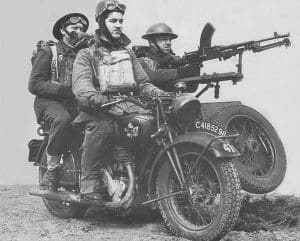
 Motorcycles have always been important for mobility. From the end of the 19th century until today they are were used by (para-)medics to visit their patients. In fact, in many European cities the motorcycle made a come-back in the end of the 20th century as ambulances and are still used that way; In Ireland and the United Kingdom they are also used for medical dispatches. In the United States, the first motorcycles were already used by the police in the early years of the 20th century. The military started to use them on large scale during the first world war. It can’t be a coincidence that many early motorcycle manufacturers were also gun manufacturers. Soon motorcycles were also used by the happy few for leisure and racing. Mobility clubs started to use them for roadside assistance. After the second world war motorcycles were used by many workers as a relatively cheap vehicle for daily commuting and leisure. And this situation still exists.
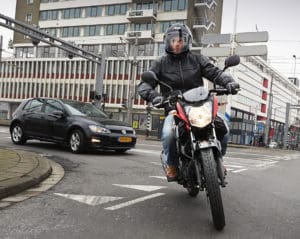 Motorcycling is often ignored by policy makers, road authorities and practically all organizations that deal with mobility. We are buried under loads of publications that tell us to switch to public transport, cycling and walking. But we have a different view. Road users in Europe recognize the advantages and joy of riding a motorcycle, they get their licence and buy a motorcycle. And with good reason. There is no quicker way to move to and in the cities than a motorcycle. FEMA members has proven this in 2014, 2017 and 2019 with the mobility tests. From time to time newspapers and magazines perform such tests too and come to the same conclusion.
One of the arguments used against motorcycling is the risk of having an accident and getting seriously injured or worse. We cannot deny that this risk exists. After all, motorcyclists do not have a protective cage around them like car drivers do. However, notwithstanding a growing number of motorcycles and riders, the fatal accident curves are lowering. Look at the graph, comparing the growing European motorcycle parc to the declining number of fatalities, and draw your own conclusions.
Motorcycling is often ignored by policy makers, road authorities and practically all organizations that deal with mobility. We are buried under loads of publications that tell us to switch to public transport, cycling and walking. But we have a different view. Road users in Europe recognize the advantages and joy of riding a motorcycle, they get their licence and buy a motorcycle. And with good reason. There is no quicker way to move to and in the cities than a motorcycle. FEMA members has proven this in 2014, 2017 and 2019 with the mobility tests. From time to time newspapers and magazines perform such tests too and come to the same conclusion.
One of the arguments used against motorcycling is the risk of having an accident and getting seriously injured or worse. We cannot deny that this risk exists. After all, motorcyclists do not have a protective cage around them like car drivers do. However, notwithstanding a growing number of motorcycles and riders, the fatal accident curves are lowering. Look at the graph, comparing the growing European motorcycle parc to the declining number of fatalities, and draw your own conclusions.
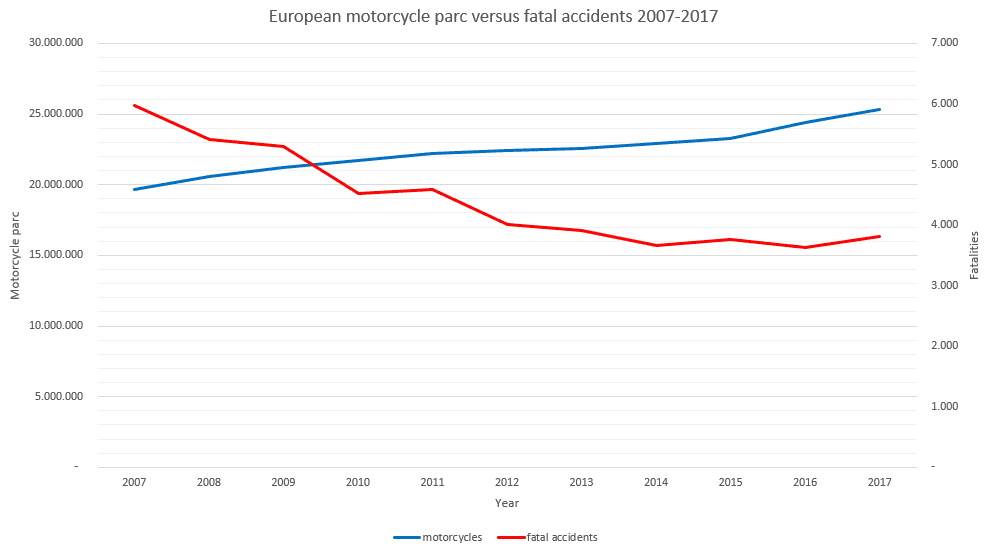
Development of fatal accidents in Europe
‘It is easy to understand why so many people switch to motorcycling’
 As for infrastructure, FEMA and its members work on a European, national and local level to enhance the infrastructure, by having roadside barriers fitted with motorcycle protection systems, remove dangerous obstacles, redesign crossroads, have roads better maintained. We work on better initial rider training and road safety awareness by motorcyclists and other road users. Some FEMA members even give traffic education to young people in schools. We also participate in European committees that deal with the development of automated driving cars to make sure that they are also safe for motorcycles. To make certain that motorcycles on the road stay safe, we disseminate the motorcycle recalls from the European Commission and we give fair information to riders about new developments.
Not only the safety of motorcycles and motorcycling has improved. We also see that motorcycles have become much cleaner. Emission limits have dropped spectacularly in the last twenty years. With the implementation of the Euro 5 standards this year, motorcycle emission limits are comparable with those of petrol cars and in some respects lower than that of Diesel cars. The graph shows how emissions have declined in the past 20 years from Euro 1 to Euro 5.
As for infrastructure, FEMA and its members work on a European, national and local level to enhance the infrastructure, by having roadside barriers fitted with motorcycle protection systems, remove dangerous obstacles, redesign crossroads, have roads better maintained. We work on better initial rider training and road safety awareness by motorcyclists and other road users. Some FEMA members even give traffic education to young people in schools. We also participate in European committees that deal with the development of automated driving cars to make sure that they are also safe for motorcycles. To make certain that motorcycles on the road stay safe, we disseminate the motorcycle recalls from the European Commission and we give fair information to riders about new developments.
Not only the safety of motorcycles and motorcycling has improved. We also see that motorcycles have become much cleaner. Emission limits have dropped spectacularly in the last twenty years. With the implementation of the Euro 5 standards this year, motorcycle emission limits are comparable with those of petrol cars and in some respects lower than that of Diesel cars. The graph shows how emissions have declined in the past 20 years from Euro 1 to Euro 5.
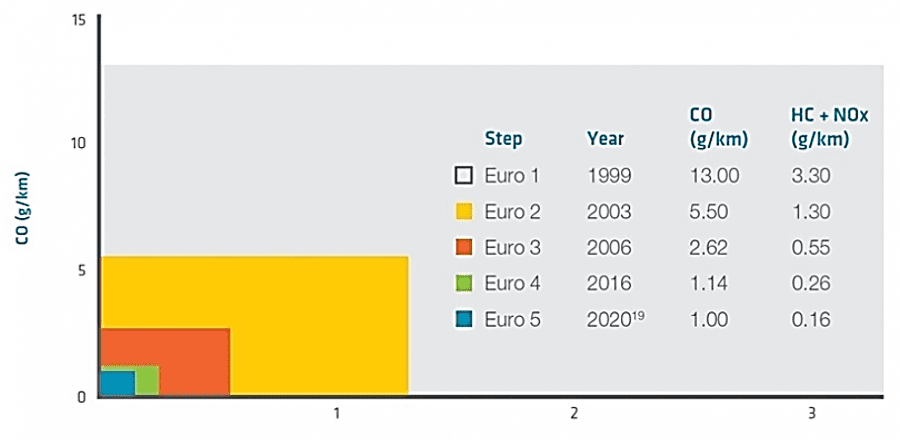
Euro limits for motorcycle emissions (source: ACEM)
This article was originally published on The Federation of European Motorcyclists' Associations website on February 20, 2020. Read the original article here.